

The environment that surrounded these initial coding communities was extremely influential. There was increased access to computers at home in the late 1980s and early 1990s; however, online communities felt rudimentary in comparison to current technological advancements. People used loud dial-up modems, slow downloads, and communicated with other users in bulletin boards that operated as isolated digital social hubs. The bulletin board systems (BBS networks), according to the Computer History Museum, were among the earliest examples of online communities where programmers would exchange software and information, and engage in coding discussions, before the internet era began. This historical perspective is essential since many teenage programmers were not only gaming on the computer, but programming in an early version of what the internet community of programmers would later become.

The environment that surrounded these initial coding communities was extremely influential | Image Credit: Wikimedia Commons
The culture of early coding communities was built around sharing and experimentation
Early online programmer communities were influential because they focused more on experimenting rather than being credentialist. Anyone young or old but passionate about programming could contribute code, fix bugs, and discuss technologies without having to be connected with any institution or organization. A kid who was coding a video game in their room had the opportunity to connect with other programmers miles away who were dealing with the same kind of technological problem. According to research on early digital communities published in MIT Press Reader, bulletin boards facilitated some of the collaborative practices of internet culture, such as troubleshooting and file exchange.
The culture was especially important for young programmers, since in many ways it was impossible to separate developing games from understanding hardware. Teenagers messing around with graphics, audio, and user interface would essentially be learning software engineering as they tried to make entertaining stuff. In any case, the program wasn’t always everything that was at stake. The real appeal was to learn how much more one could do with machines via programming. It was also common practice back then to modify things and remix programs. Software was not seen as something untouchable and final but something that could be endlessly tweaked and improved by people who might never have met face to face.

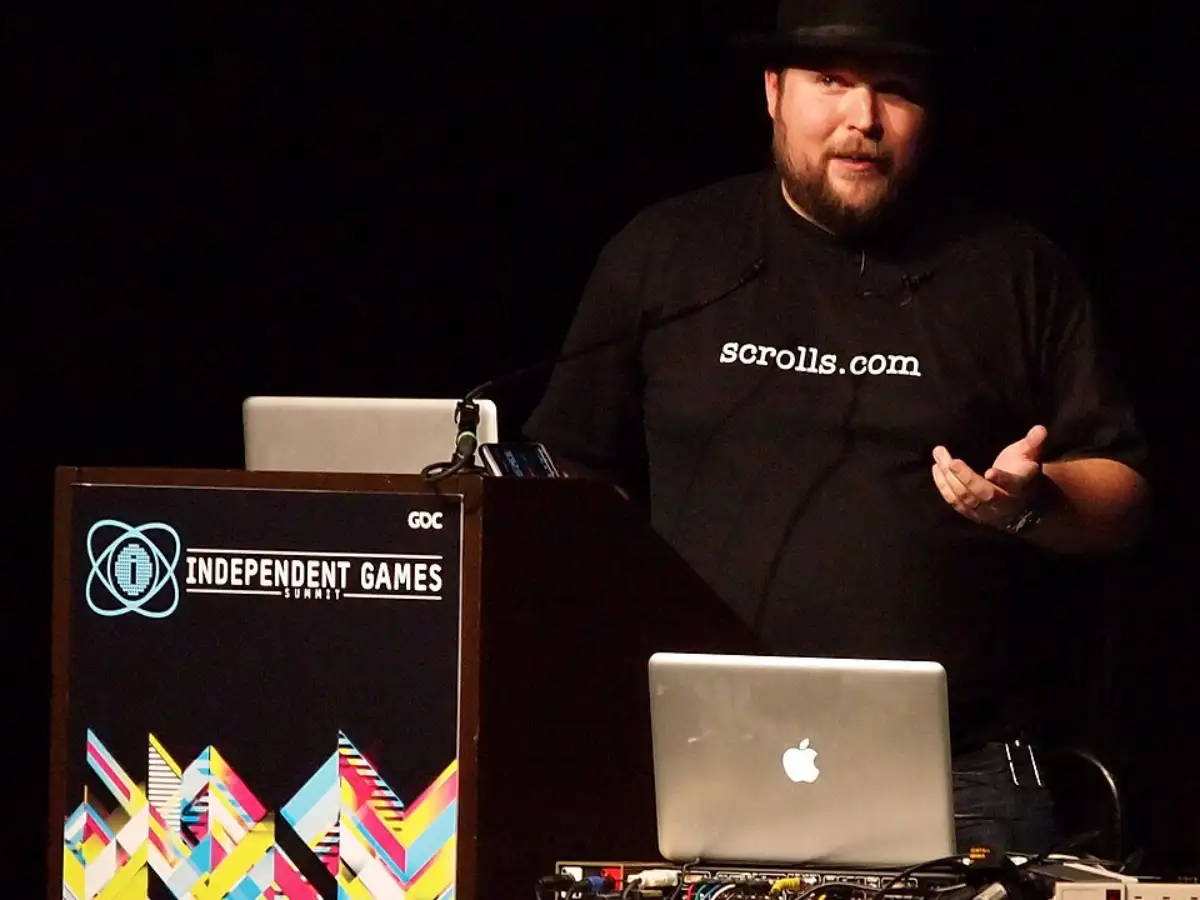
Markus Alexej Persson, Swedish video game programmer and designer, creator of Minecraft | Image Credit: Wikimedia Commons
Early online coding culture changed how programmers learned from each other
The relevance of such communities is evident when compared with the isolation that persisted in the field prior to this. Prior to having access to the Internet, programming relied on resources such as books, informal club environments, and institutions of learning. One of the ways that BBS made programming learning far more accessible was through enabling users to share actual code samples on their bulletin boards. According to Britannica, bulletin board systems represented an important step towards online communication due to their ability to enable users to share software, communicate via messages, and create specialized forums.
This is an environment that produced a generation of programmers with approaches to coding more experimental than those of engineers. The main point of this particular story is its relevance for today’s programming community, as modern programming culture also contains a great deal of ideas from that era. Repository hosting services, developer forums, code reviews, and even open source programming share a part of their culture with those earlier days when hobbyists exchanged their half-ready pieces of code on dial-up connections. As far as those teens working on their first games were concerned, the excitement was not about founding the next billion-dollar enterprise or becoming a programmer-celebrity. It was all about curiosity, challenge, and, most of all, finding out that others cared about those weird technical issues as well. And this is what made that community so important from the historical perspective; they turned programming from a lonely hobby into a culture several years before the Internet got to the mainstream consciousness.


