
A hillside stripped bare
Before Europeans arrived, most of Vermont was covered in forest. However, the axes soon followed. The settlers started clearing land to create fields for agricultural purposes, cutting down trees to build their houses and fences, and burning them to extract potash. By the mid-1800s, sheep farming exploded across the state, sending wool to textile mills in southern New England. At its peak, Vermont had almost 1.7 million sheep grazing on land that had once been forest. However, the system couldn’t last forever. Once tariffs fell and grazing shifted farther west, wool became less profitable for Vermont farmers. These farmers were left with land that had already been stripped of its trees and topsoil. With nothing to anchor the land in place, rains caused erosion on hillsides and flooding of streams. Many just packed up and left Vermont. This was the degraded land Frederick Billings bought with the Woodstock farm in 1869.
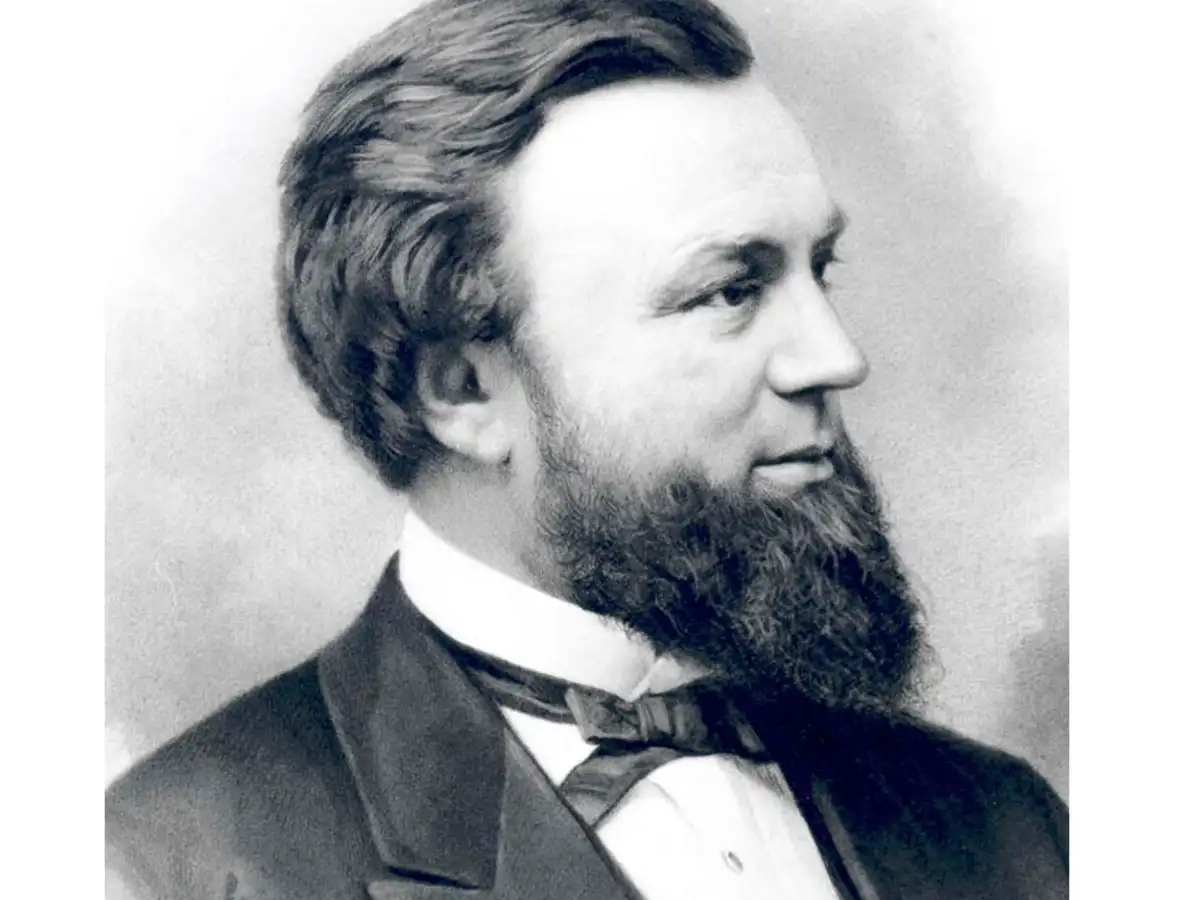
The man behind the comeback: Frederick Billings and his vision for a working forest. Image Credits: Wikimedia Commons
Why one man decided to replant a mountain
Billings did not grow up in Woodstock, but he had deep ties to it, and to a neighbor’s ideas. The neighbor, George Perkins Marsh, often referred to as the father of the American conservation movement, was born on the very same land nearly seven decades earlier. In 1864, Marsh published the book Man and Nature, which argued that too much deforestation would destroy the soil, climate, and water system of a region. Per the National Park Service’s own profile of Marsh, the book became one of the most influential books of its time, shaping how Americans thought about land for generations to come. Billings took that warning seriously. He started reforesting Mount Tom with Norway spruce as his own personal touch, along with white pine, Scotch pine, red pine, and European larch. But Billings did more than plant trees; he created a forest that could be logged and studied. He also constructed paths and carriage ways so people in Woodstock could see firsthand how a restored forest would look.

From one family’s project to a national model
The property stayed in the Billings family for generations before becoming the Marsh-Billings-Rockefeller National Historical Park. Today, the National Park Service manages the same 550-acre property, practicing selective logging, monitoring the health of the forest, and planting Norway spruce around the manor, just like the family used to do a long time ago. The park planted a new spruce plantation in 2006 to carry on that tradition.
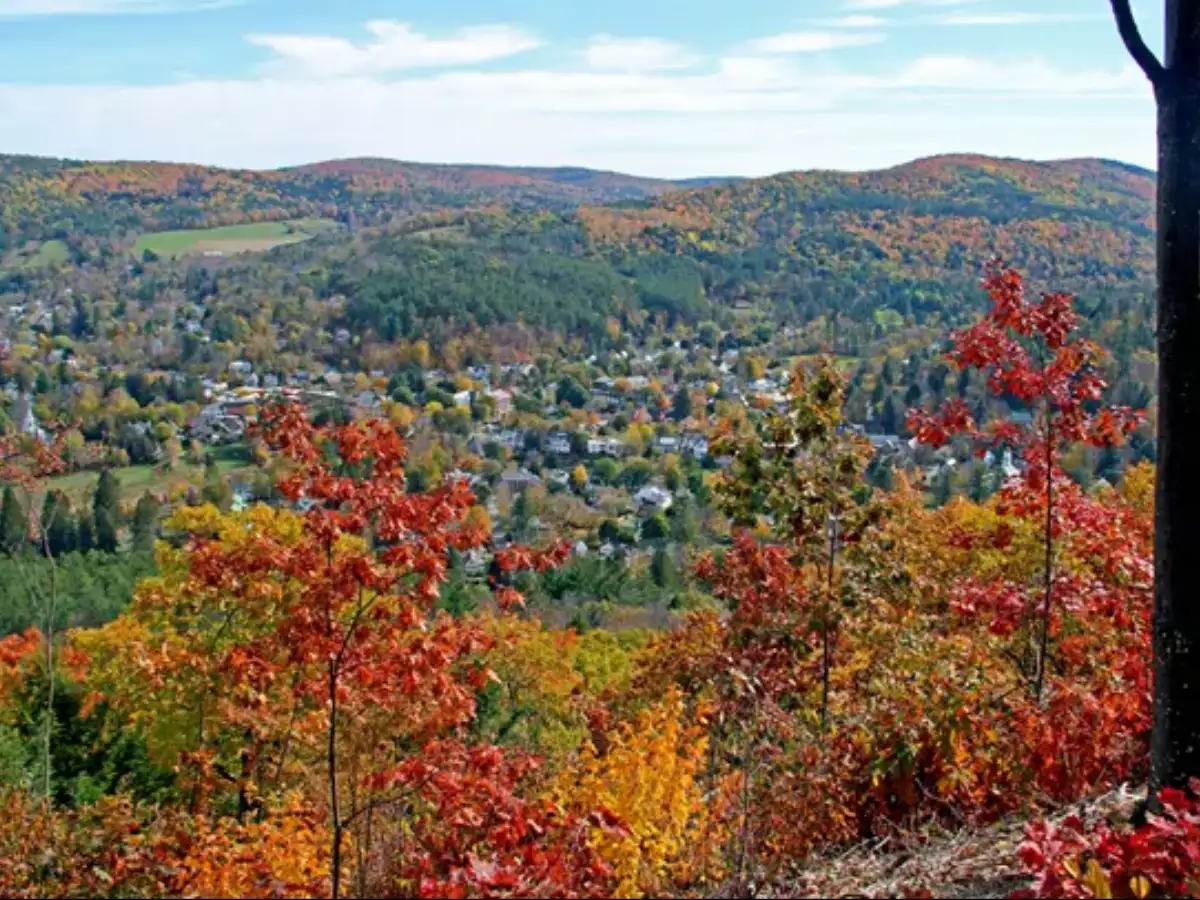
Mount Tom’s slopes today, part of the 550 acres still managed as working forest. Image Credits: National Park Service
Mount Tom is not an isolated case. A study titled ‘Land use change in New England: a reversal of the forest transition’ published in the Journal of Land Use Science notes that the entire New England region underwent the same process of a “forest transition.” The farms were left vacant as agriculture moved west, and the forests came back to life naturally. But most of that regrowth happened on its own, without anyone tending it. Mount Tom is different: Billings didn’t just let the land recover; he actively planted, logged, and studied it, which is why it’s remembered as a managed forest rather than simply a reclaimed one. Currently, about 78% of Vermont is covered in forest, according to the Vermont Department of Forests, Parks and Recreation reports, not far from what it looked like before it was stripped of trees.
Why this old forest still matters to a young audience
Environmental destruction can feel irreversible, especially amid rising climate anxiety. Mount Tom offers a counterexample. It shows that an environmentally devastated area can recover if you spend decades working with it. In this case, there were no viral moments. Only one family and later the National Park Service coming back to a mountain every year. The forest also has limits that are worth respecting. The act transferring the land to the National Park Service makes camping, having campfires, mountain biking, snowmobiling, and driving motor vehicles illegal. It’s meant to be walked through quietly, not conquered. Next time your Instagram feed is full of doom about the planet, it might be worth remembering Mount Tom. In 1869 someone took a look at a ruined hillside and decided it was worth 550 acres of patience. That patience is still growing, one carefully tended tree at a time.

