
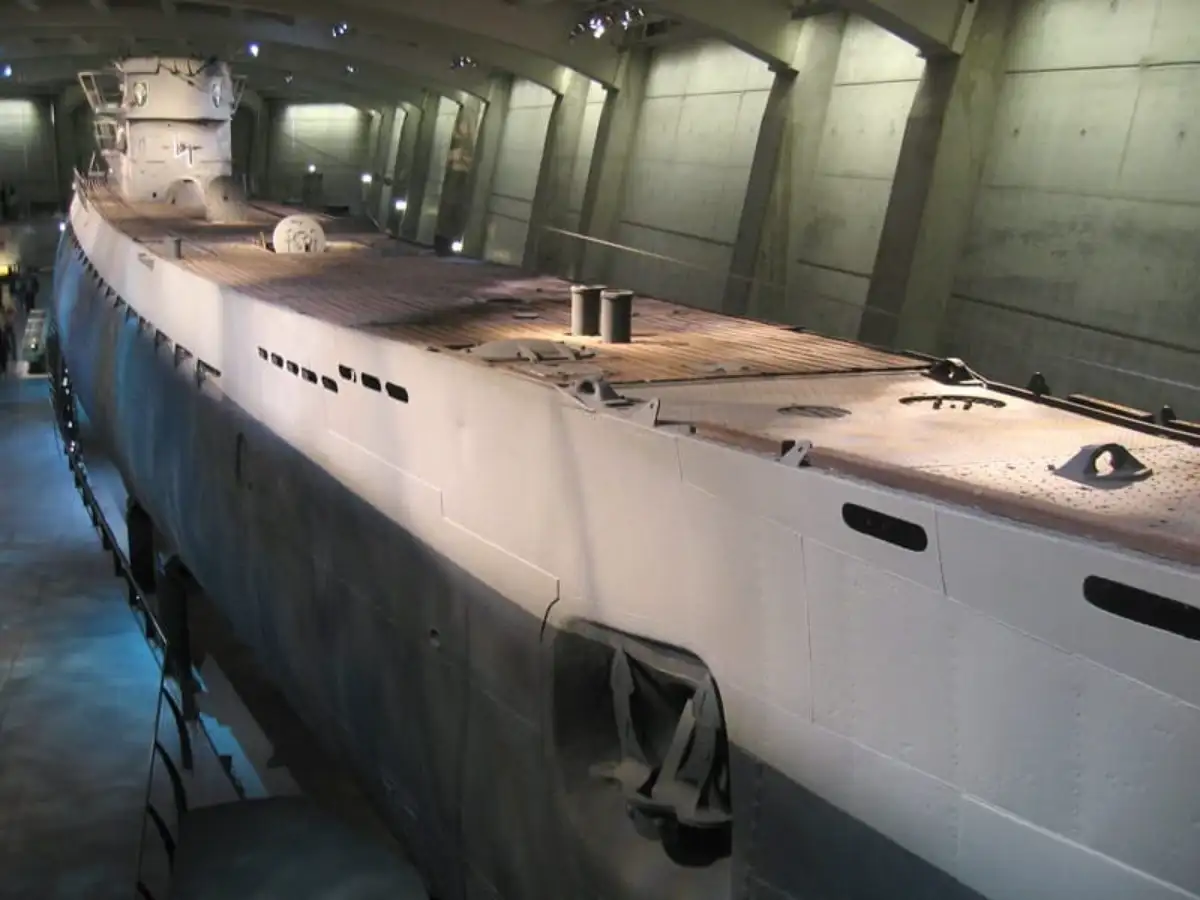
WWII German U-Boot U-505. Image credits: Wikimedia Commons
Almost seven decades later, in 2010, a NOAA-led expedition sent a robotic submarine to inspect the wreck, and the researchers discovered the entire scene covered in colonies of Lophelia pertusa, cold-water corals that were so abundant tthat the ship’s name across the stern was largely obscured by draping coral growth, with only the letters “GULFOI” still visible where the growth was thinner. This is the true story of the afterlife of the SS Gulfoil, and its strangeness surpasses most man-made stories.
The two minutes that created an ecosystem
Nineteen survivors managed to get onto life rafts and floated around for 35 hours before being rescued by a tanker. The Gulfoil sank so quickly that it did not send a distress signal. It remained undetected for decades. It was positively identified by archaeologists during NOAA’s Lophelia II expedition in 2008, and the documentation of the wreck was completed in 2010 aboard the research vessel Ronald H. Brown using the robotic submersible Jason II, according to NOAA’s Office of Ocean Exploration and Research.
What they discovered is not the typical shipwreck image of a decaying hull sitting abandoned on the sand in a scene out of a Hollywood movie. This wreck was living. The wheelhouse, the aft cabins, the walkway across the full length of the ship, all of them were covered in coral growth, whereas the areas below the antifouling paint line remained mostly empty.

Why a torpedoed tanker makes a five-star coral hotel
Lophelia does not need sunlight; it thrives in cold water by feeding on plankton rather than relying on symbiotic algae, and it is not vulnerable to bleaching in the same way tropical corals are. It requires hard substrate, which is very hard to come by in an ocean that, for the most part, is made up of soft mud in all directions, for as far as the eye can see. The steel hull is like property in a property-starved environment.As reported in a 2016 briefing by the American Geophysical Union, shipwrecks from centuries ago in the Gulf region are now flourishing into vibrant artificial reefs, thriving with life forms such as Lophelia, anemones, and many others.
The uncomfortable part: these reefs are also oil-spill monitors
Not only do the scientists find these wrecks beautiful, they conduct research through these sites to understand how deep-sea creatures adapt to petroleum pollution, as these sites have ample data to provide due to the long exposure of the Gulf to such an issue.
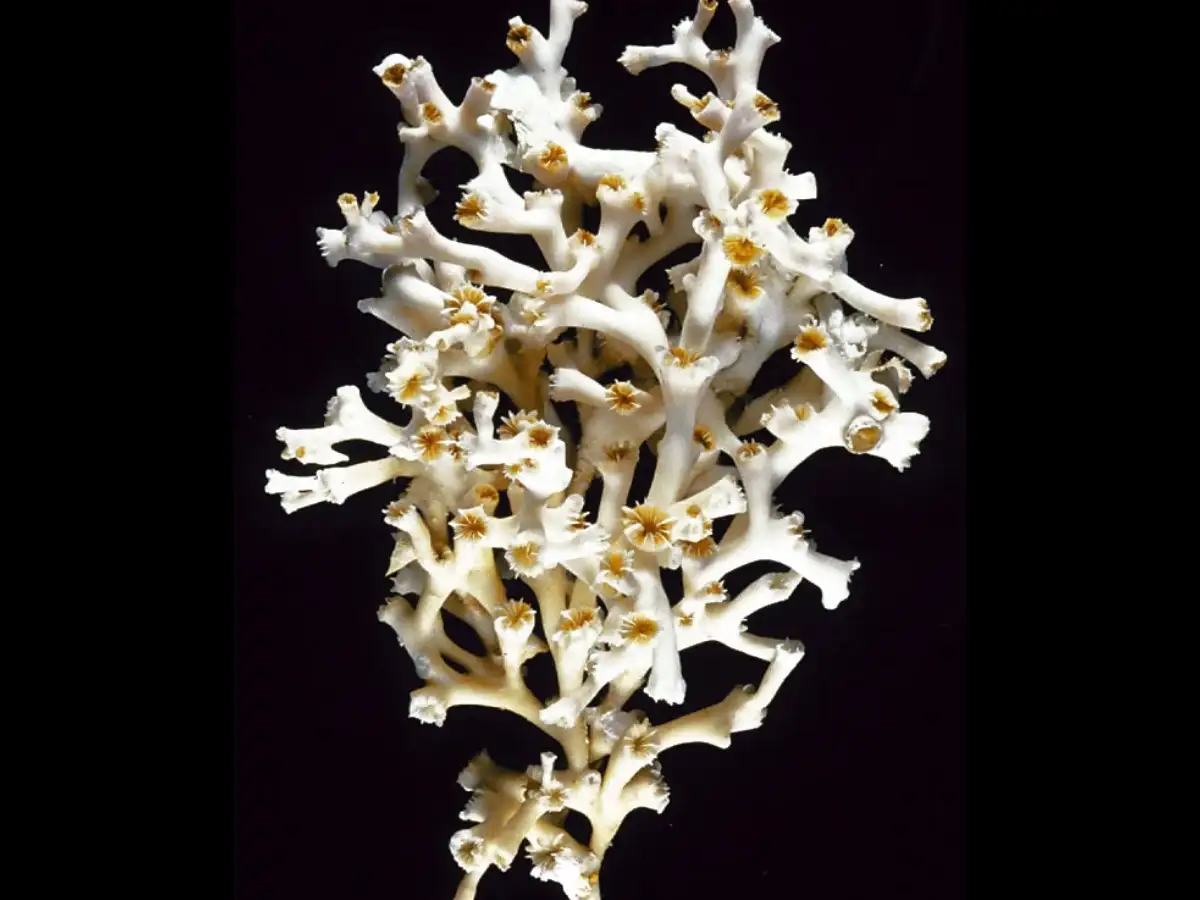
A close-up view of Lophelia pertusa. Image credits: Wikimedia Commons
As reported in a peer-reviewed scientific paper titled “Deep-Sea Biofilms, Historic Shipwreck Preservation and the Deepwater Horizon Spill,” published in Frontiers in Marine Science in 2019 and led by researchers from the University of Southern Mississippi, the microbial biofilms present on the shipwrecks found in the Gulf of Mexico that are responsible for determining how fast the steel material on them corrodes and whether they are capable of hosting corals or not were significantly different in sites exposed to Deepwater Horizon oil spill than those not exposed. In simple terms, the same industry that has left its wrecks to serve as coral gardens is responsible for endangering them now.
What it actually says about the deep ocean
The Gulfoil offers an example of how life can colonize a wreck in deep, dark water. But it’s not a backdoor. It took nearly 70 years for this coral to settle onto steel that wasn’t supposed to be there, roughly 490 meters (1,620 feet) down, in water that is routinely tested for oil pollution. The message isn’t “the ocean heals, so there’s no need to worry.” The ocean is healing itself here on a cemetery created by us, in an area we keep drilling, and at the very least, we owe it the courtesy of noticing what the cameras from NOAA saw there.

